
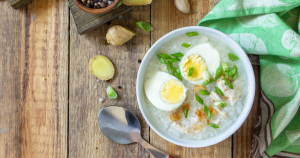
A soupy rice dish is not the first meal Americans think of when they think healthy eating. But in Asia, congee is a staple in a healthy diet. Congee is as common as oatmeal or chicken noodle soup is for us. Congee is also super easy to make– all you need is a crock pot or rice cooker. Set it, forget it, and come back to a nutritious meal.
The soupy rice is the base. Then you can add toppings and get different variations. And those variations also vary in nutritional value.
So this post goes over what is congee is, why it’s the easiest healthy meal you can make. And how to maximize the health benefits of congee every time you make it.
What is Congee?

Congee is a rice porridge or rice soup from Asia. It’s a traditional breakfast food and a staple (like chicken soup) when you’re sick (like chicken soup).
Different cultures in Asia have their own take on congee. But I’m most familiar with Chinese congee (since I lived in China for 9 years), so that’s my focus for this post.
The soupy rice is the base of this dish– it’s just rice and a large amount of water. A common rice:water ratio is 1:9 or 1:10.
Reasons to Try Congee
1. This simple food is (so) easy to Make
You can make congee in any kind of cooker (pressure cooker, rice cooker, slow cooker, instant pot) or a stovetop pot. Just add rice and water. Easy. And it’s full of simple ingredients. Even better.
2. It’s comforting when you’re sick
Congee brings the same comfort as a soup does when you have a cold or sore throat. The warmth can provide some relief from congestion. And the warmth can help sooth a sore throat.
A bowl of congee is also great if you have a stomach bug, food poisoning, or nausea. That’s because it’s easy on your digestive system. It fits into the BRAT diet (bananas, rice, applesauce, toast)– the tried-and-true diet when you can’t keep most foods down. Plus…
3. It’s helps you stay hydrated (if you can’t keep much down)
It’s hard to stay hydrated when you’re throwing up or having diarrhea. So if you can tolerate it, congee can help you stay hydrated. Because it’s basically soupy rice.
4. You can pack it full of healthy foods
The base recipe is water and rice…but you can add whatever you want to congee. So it can become a great source of nutrition…especially if you eat it on a regular basis.
How Make Congee (the base)
Ingredients
- 1 part rice (any kind)
- 10 parts water (or low sodium broth
Use 1:10 parts water/broth for a standard thickness.
That means if you make a 1/2 cup of rice, use 5 cups of liquid.
1/4 cup rice, use 2.5 cups of rice.
Reduce the liquid if you want a thicker congee.
Equipment
Pressure cooker, rice cooker, Instant Pot or stove top pot with lid
Instructions:
- Wash rice and drain out water
- Add washed rice to your cooker or pot.
- Add water or broth to rice. If cooking on the stove top, bring water or broth to a medium heat
- Add your seasonings, protein, veggies
- Cook on low heat
- Use the congee or porridge setting on your slow cooker, rice cooker, InstaPot
- If cooking on the stovetop, simmer on low for 1-2 hours. Stir occasionally.
- Remove from heat
- Portion congee into a bowl and add toppings.
- Serve
Like I said, the base is super simple to make. But to increase the health benefits of congee, it’s all about what you add to it.
A
How to Maximize the Health Benefits of Congee
Wash your Rice
There are two reasons to wash your rice: It might be dusty and it helps with texture.
1. Your Rice May be Dusty
There could be dust, debris…bugs remnants on your rice. It is a crop so that’s all normal. The easiest way to boost the health benefits of congee is to start with clean rice.
2. Washing Your Rice Stops the Clumps
This doesn’t change the nutrition, but have you ever boiled rice (without washing it) and it gets all gummy and clumpy? That’s because of starch. When you wash rice, that extra starch comes off so it helps the rice grains stay separated. But don’t wash too much of the extra starch off because we want a porridge consistency.
Rinse your rice 1 or 2 times is fine.
Mix Your Rice with Other Grains or Beans

Try these to increase the fiber, folate, protein and antioxidants in your congee:
- Quinoa
- Meng beans
- Split peas
Fiber helps you stay regular (in the bathroom)
Folate helps tissue grow and cells function. Plus if you’re pregnant, folate helps prevent neural tube defects in your baby.
Antioxidants protect your cells from damage which can help prevent diseases (who has time for heart disease? Not you!)
All good reasons to get these into your diet.
Use Water or Low-sodium Stock or Bone Broth
You can make congee more flavorful if you use a vegetable beef or chicken stock, or a bone broth. But these are high in sodium. So look for “low sodium” stocks and bone broths.
Season with Low-to No Salt Seasonings:
- Ginger
- Garlic
- Scallions
- Black pepper
- Red pepper flakes
- Paprika
- chili flakes (if you feel spicy)
- Rice vinegar (Check if it’s plain vs seasoned rice vinegar though– the seasoned kind can have salt in it)
- Low sodium soy sauce or coconut aminos
Add a Lean Protein

Soupy rice is not filling. But protein can fix that. Because protein helps you feel fuller for longer. And that’s because it takes longer for the body to digest it.
Protein Sources:
- Hard or soft-boiled egg
- shredded chicken (buy a rotisserie chicken and shred it for less cooking)
- Oyster mushrooms
- Wood-ear mushrooms
- Turkey sausage
- Tofu (I prefer the extra firm tofu or tofu skins)
And Then Add Veggies

Good Vegetables to Add:
- Sweet potato
- Spinach (with garlic)
- Kale
Toppings
- pickled vegetables like radish or kimchi
- Picked vegetables are high in salt. So don’t go crazy.
- green onions aka scallions
- Crispy onions
- dried seaweed (Don’t knock it til you try it– it’s an easy way to get micronutrients like magnesium, potassium, and folate)
Takeaway
Congee is one of the easiest healthy meals you can make. Ever. It’s all about what you put in the congee.
If you want to maximize the health benefits of congee, add lean protein, use low sodium seasonings and nutrient-dense toppings (or watch your portion sizes). Veggies are an an easy way to bump up the micronutrients. Then my friend, you have a balanced meal.

