

Eating out is not the problem.
The idea that eating out is automatically bad for your health is one of the most persistent myths in nutrition. And it keeps people in this weird cycle of guilt with every restaurant meal or completely abandoning their health goals the second they sit down at a table.
Neither of those is a skill. They’re just two different versions of not knowing what to do.
Now the average American eats out about 5 times a week. And sure, cooking at home is “healthier”.
But take out and restaurant food aren’t going to suddenly disappear from your diet. So if you’re trying to improve your metabolic health— weight, blood sugar, cholesterol, energy— you cannot treat every restaurant meal like a “cheat meal” or a catastrophe. You need an actual approach to eat healthy in restaurants that doesn’t ruin your meal.
Here’s how to build that approach.
Start Before You Get There: Where You Eat Matters
You have more control over this than you think.
Not every restaurant gives you the same options, and if you have any say where you go, use it. Aim for a place with some vegetable-forward options, protein choices, and some flexibility in the menu.
What to look for:
- A menu with at least a few options that aren’t fried or cream-based
- The ability to swap or modify (most sit-down places will do this)
- Some kind of vegetable or salad option
That’s it. You’re not looking for a health food restaurant. You’re looking for a place that gives you something to work with.
When you don’t have a choice, like a work dinner, a family birthday, a friend who really loves Applebee’s, or a food desert, you move to the next skill.
How to Actually Read a Menu (the true skill to eat healthy at restaurants)
Most people open a menu and immediately start looking for what sounds good. Which is fine, you should like your food. But if metabolic health is your goal, you want to layer balance on top of that instinct.
That balance starts with protein and vegetables first. Everything else second.
First, find your protein anchor. Ideally grilled, baked, broiled, or roasted options instead of fried or heavily sauced proteins. Chicken, fish, shrimp, lean beef, eggs, legumes…pick something that makes sense for whatever you’re eating.
Then look at sides. Is there a salad? A vegetable side? Something you can swap in like extra cabbage? A lot of restaurants will let you swap fries for a side salad or sub a vegetable.
You don’t have to get the “healthiest” item on the menu. You just want a meal that has some protein, some vegetables, and isn’t entirely built around refined carbs and saturated fat. Basically you want balanced meals.
A few other things worth knowing:
- Sauces and dressings on the side is not a diet thing. It’s a portion control thing. You can have the sauce. You just don’t need to drown your food.
- Appetizers count. If the table is sharing a queso dip and loaded nachos before anyone’s entree arrives, that is part of the whole meal.
- You don’t have to clean your plate. Restaurant portions are notorious for being huge. So eat until you’re comfortably full and take the rest home.
Get the skills to manage your metabolic health
Get my free 5-lesson email course and start making better food decisions at any meal, any day of the week.
Real Examples: McDonald’s and Chili’s
I’m not going to pretend these are health food restaurants. But these restaurants are popular for a reason and they’re just about everywhere. So let’s be real about what works.
McDonald’s
McDonald’s is not where you go to eat healthy. But you can make “healthier” choices than the standard Big Mac, large fries, large Coke (which in total has 1440 calories, 105g of added sugar, and 1555mg of sodium according to McDonald’s nutrition calculator).
The easiest move is to just downsize. Smaller hamburger, smaller fry and smaller coke. That alone makes a huge difference in the nutrition.
But if you want more nutrient-dense options:
- Egg McMuffin: 17g of protein, 770mg of sodium, 6g of saturated fat and 2g of fiber. Not amazing but it’s more balanced than not.
- McDouble over the Big Mac: The Mcdouble has almost the same amount of protein (22g vs 25g) but 190 calories and 140mg of sodium less. Not a bad swap.
- Swap the drink: Water, unsweetened iced tea, or black coffee instead of a large soda saves you hundreds of calories without touching your food.
You’re not getting a nutritionally perfect meal. But you can make choices that don’t completely derail your goals, and that matters when you’re on a road trip or it’s 9pm and that’s what’s available.
Chili’s
Sit-down chains like Chili’s give you a few more options and flexibility than a fast food restaurant. But the trap is that the portions are enormous, everything is covered in sauce or cheese and the “lighter” section of the menu isn’t always that “light”.
What works well here:
- Grilled chicken or salmon: both are solid choices on the menu
- Ask to swap the side: most Chili’s entrees come with fries or mashed potatoes. Swap one out with the steamed broccoli or house salad
- Fajitas: legitimately one of the better options at any Tex-Mex chain. You control what goes in the tortilla. Load up on the peppers and onions, use the protein but go easy on the sour cream and cheese
- Skip the chips and salsa refills: one round is enough
The nice thing about sit-down restaurants is that you have time to really check out the menu.
The Most Underrated Option: Eat at the Grocery Store
I want to talk about this more because I think people completely overlook the grocery store as a place to eat out.
The modern grocery store is not just a place to buy raw ingredients anymore. Most of them have a hot bar, a deli counter, pre-made meals, and an entire section of grab-and-go components.
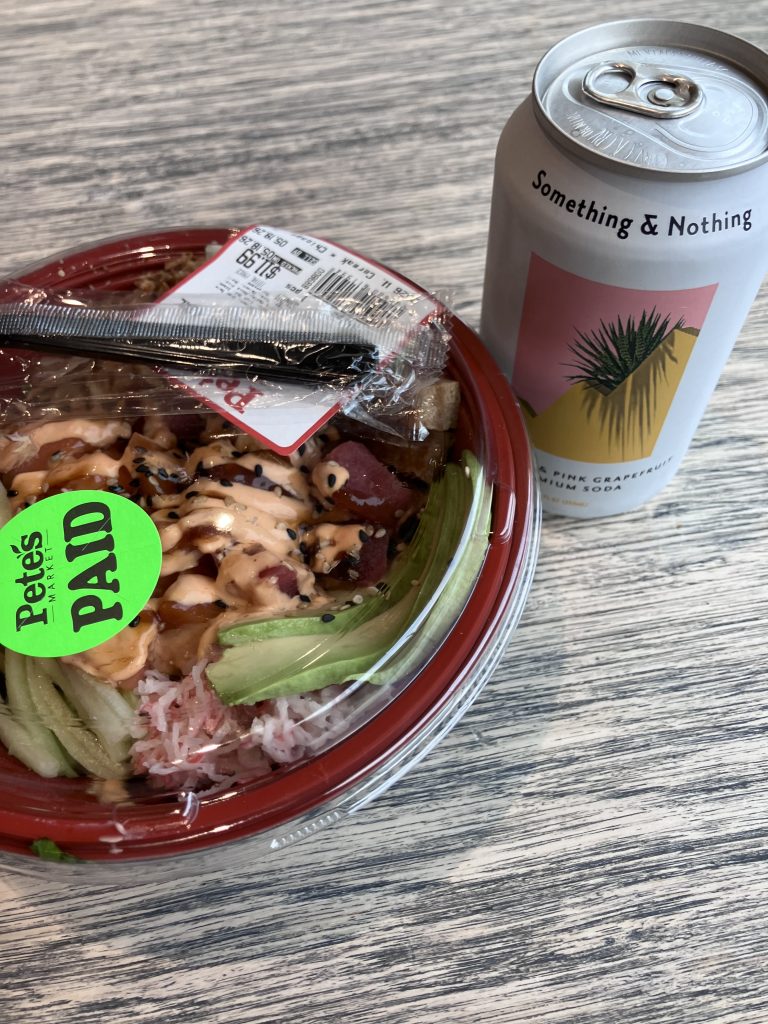
And the nutrition is often similar or better than a restaurant meal at a similar price point. But you have so much more flexibility with what you get and portion sizes.
The Hot Bar
Whole Foods, Mariano’s, Jewel-Osco, most co-ops, they all have one. And if you know how to use it, it’s one of the easiest ways to build a solid meal fast.
The approach is the same as a restaurant menu: protein first, then vegetables, then everything else.
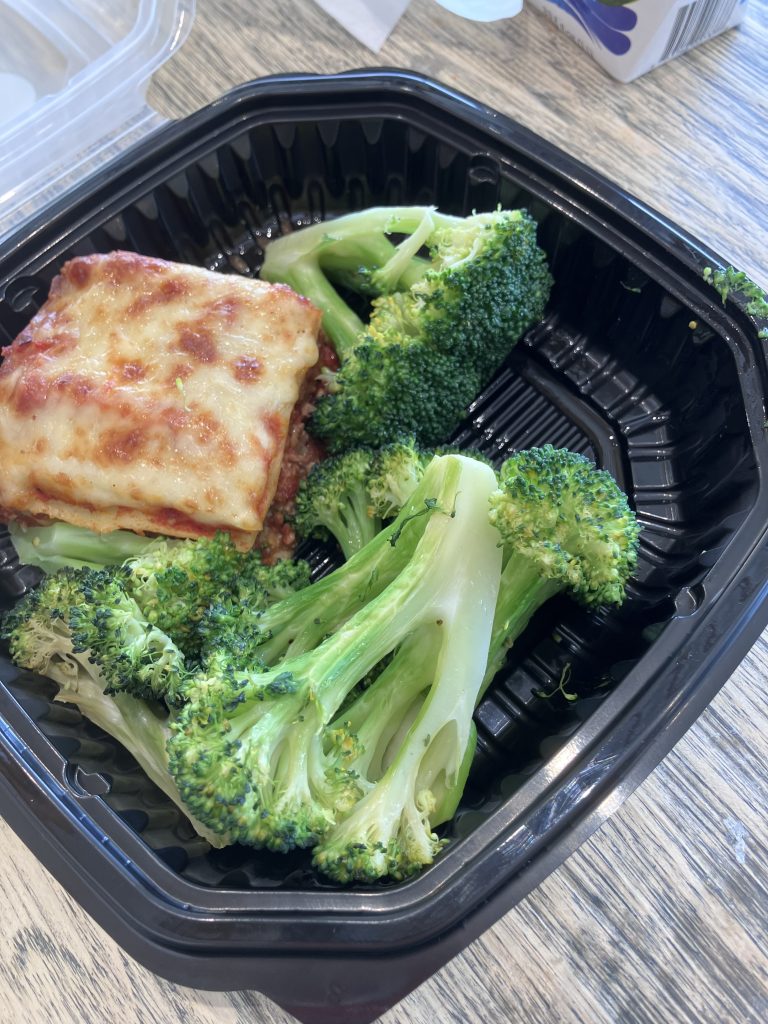
- Chicken, grilled fish, roasted meat. You’ll usually find at least one of these on the hot bar.
- Roasted vegetables, steamed broccoli, sauteed greens. Load up here.
- Add a grain or legume like brown rice, lentils, beans or quinoa. Or they can be part of your protein like with lasagna.
You’re essentially building a “pick your own bowl” style meal. And you have a lot more control over your portions compared to in a restaurant.
Another option is to shop the aisles and make your meal from some ready-made food options.
Building a Meal from Components
This is honestly one of my favorite moves and I don’t think enough people do it.
Most grocery stores sell:
- Pre-cooked rotisserie chicken (pull it apart, it’s already done)
- Pre-washed bagged salads and greens
- Microwavable grain pouches (90 seconds and it’s done)
- Canned beans, pre-made hummus, hard-boiled eggs
- Cut fruit and vegetables in the produce section
So grab a rotisserie chicken, a bag of salad, and a grain pouch. That’s a complete meal in under five minutes with no cooking involved. And it’s maybe $15 at most.
This strategy is especially useful when you’re traveling, working late, or when every restaurant option nearby is low-quality fast food. You can also supplement fast food like McDonald’s with some veggies from the store and call it a day.
And that’s why I think the grocery store is truly an underrated place to eat out.
One More Thing: Don’t Make It a Whole Thing
The goal isn’t to be the person who interrogates the server about every ingredient or orders a sad, plain chicken breast with no seasoning.
The goal is to give yourself flexibility to make slightly better decisions and to make those decisions consistently. But don’t beat yourself up if you just want the pasta.
Get the pasta. Enjoy it. Move on.
Nutrition skills are not to be perfect. Instead, they give you a system so you’re not starting from scratch every single time you eat out. Over time, your default approach compounds. And you make better choices more often without thinking about it because you’ve built the right habits.
That’s what metabolic health actually looks like in real life. Not a perfect diet. A set of skills that holds up when things aren’t perfect.

 Is Italian Ice Healthy? A Dietitian’s Take on the Sugar
