
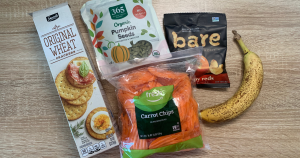
“Low sodium” means any food item must have 140mg of sodium or less per serving.
The American Heart Association recommends around 1500mg of sodium in a day for the average healthy adult. And 2300mg is the upper recommended limit.
Which sounds like a lot. But if you measure it out…
It’s a teaspoon.
That’s right. The most sodium you should have in a day fits into a teaspoon.
But what’s more wild? The average American adult eats an estimated 3500mg of sodium per day according to the WHO Global Report on Sodium Intake Reduction published in 2023.
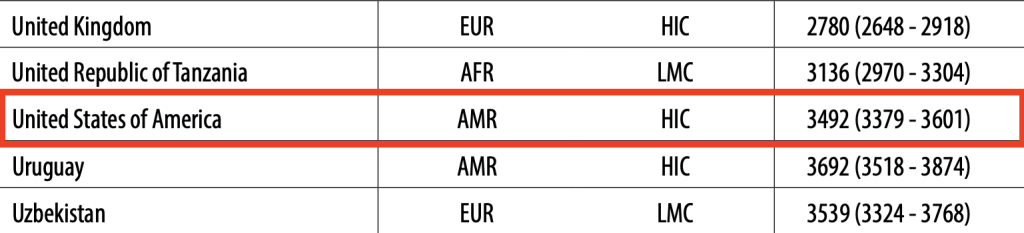
This means we need to try and eat less sodium. And choosing low sodium snacks can be a simple step toward a more balanced eating pattern.
But talk of salt and sodium in our diet is a little confusing. So it helps to know what we’re really talking about when we say “follow a low sodium diet”.
Are salt and sodium the same thing?
Technically no. Table salt (aka sodium chloride) and sodium are different. The FDA defines table salt as a crystal-like compound we find in nature.
Sodium is a mineral and it’s the sodium part of “sodium chloride” that makes up table salt.
North America’s Sodium Problem
One of the top responses I hear when I talk to people about limiting sodium is “oh, I barely use salt!”
And they’re probably right. Because over 70% of the sodium we eat in a day comes from pre-packaged foods or ready meals (from the store and restaurants)–not the table salt we add.
Even meal delivery services (like EveryPlate or Factor) that market “healthy options” can be high in sodium.
I think a lot of us have learned that “less calories = healthy”. So of course we see a recipe like this Chicken and Black Bean Enchilada Soup recipe from EveryPlate and think “this must be healthy!”
And it’s got food things about it– a moderate amount of calories for 1 meal. It’s high protein. And it has fiber (which we want more of)…
But it also has 1240mg of salt. For 1 serving! That’s almost 54% of our upper limit for sodium in a day!

For reference, a Quarter Pounder with cheese from McDonald’s has 1140mg of sodium. Wild, isn’t it?
Factor is a little better, but some of their meals can be high in sodium too. Like this Honey Mustard Chicken.

920mg is still 40% of that 2300mg upper limit.
Now, before we start thinking “sodium is bad, just get rid of it”, we do need sodium. Because it’s an essential mineral that helps regulate electrolyte and fluid balance, nerve function, and muscle contractions. And we want all that to work well.
A “little too much” sodium won’t make much of a difference
Truthfully, you can eat either of these meals and still be under 2300mg in a day–depending on what else you eat for the day.
But having more than 2300mg of sodium in a day isn’t the end of the world if it happens occasionally. A handful of high sodium doesn’t won’t make much of a difference.
The problem starts when we’re having more salt than we need almost daily…
That adds up and starts increasing our risk for conditions we don’t want.
Why Reducing Sodium is Important
In North America, excessive sodium intake contributes to our high rates of hypertension, heart disease, and kidney problems.
The Health Risks of High Sodium Intake
Salt and water are best friends. So when you consume too much sodium, your body retains extra water to maintain balance. This then increases blood pressure (because it increases your blood volume) and can put extra strain on your heart, blood vessels and kidneys. Over time, this can lead to:
- Chronic High blood pressure (hypertension): A major risk factor for heart attacks, strokes, and heart disease.
- Kidney disease: Excess sodium makes your kidneys to work harder and could lead to chronic kidney damage.
- Water retention and bloating: Too much sodium can lead to swelling (which isn’t comfortable).
But even knowing the risks, it’s hard to change our diet. Yes, you could “just cook at home more and eat less junk”.
But that statement doesn’t take into consideration that maybe you work 50-80hours a week. Or that you don’t (really) know how to cook. Or that you’re trying to feed picky eaters and you don’t have the bandwidth (or budget) to make 2-3 different options for dinner.
There are challenges to healthy eating patterns that are hard for you to control. And they’re valid.
We need to do something though. Even if it’s just a small change.
Why Small Changes Matter
Because small changes add up over time!
These small changes could be getting less cheese on your burrito bowl. Getting small fries instead of the large. Or adding veggies to your afternoon snack.
You can divide up your sodium anyway you want, but I recommend aiming for:
- 560mg of sodium or less per meal
- 150mg of sodium or less per snack
Because if you have 3 meals a day and 2 snacks, that’s 1980mg of sodium per day (which is comfortably under our 2300mg upper limit)
Next, let’s explore how to identify and choose the best low sodium snacks so we can save the heart and save the kidneys.
How to Choose Low Sodium Snacks
The easiest way to choose a low sodium snack is to read the nutrition label on the back of the package.
There are front-of-package claims like “low sodium”, “reduced sodium”. And they are useful if you understand what they mean.
This is how the FDA defines claims about sodium:

“Low sodium”, “very low sodium”, and “salt/sodium-free” claims are straightforward. There is going to 140mg of sodium (or less) in a serving size. So any foods with these claims will be low sodium (if you eat the serving size).
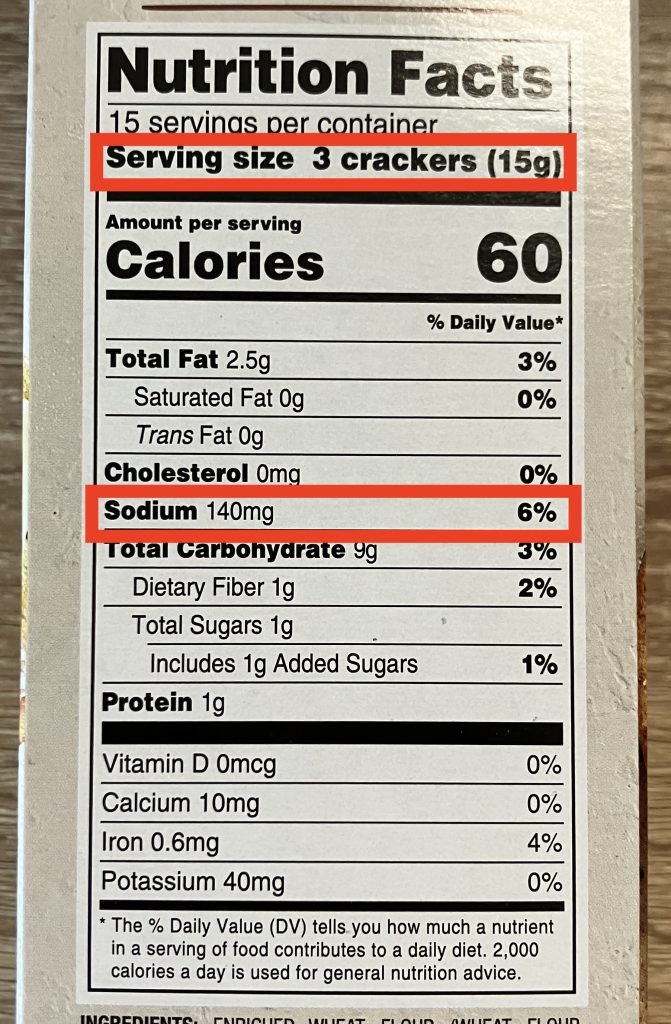
For example, the serving size for this box of crackers is 3 crackers. That means for every 3 crackers, you’re eating 140mg of sodium.

(I don’t know anyone who only eats 3 crackers, but technically the manufacturer can call these low sodium because you’re only eating 140mg of sodium per serving size–aka 3 crackers.)
But the “no salt added or unsalted”, “light in sodium”, and “reduced sodium” is where claims get tricky.
“No Salt Added or Unsalted”, “Light in Sodium” and “Reduced Sodium” claims don’t mean low in sodium
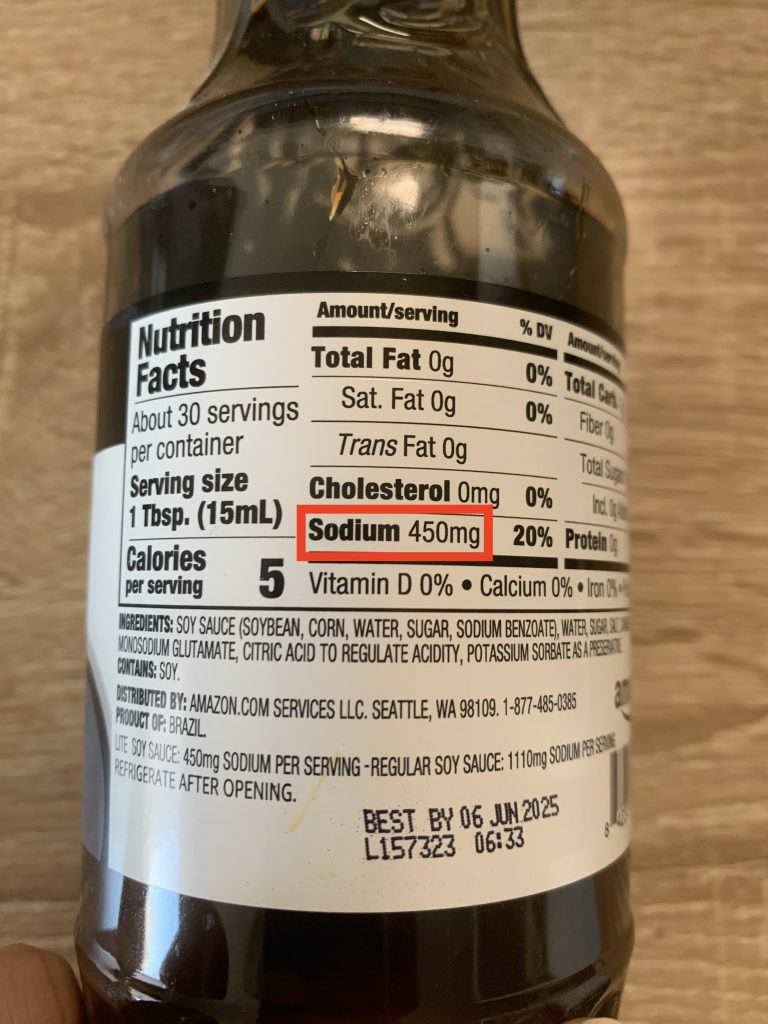
My favorite example of this is soy sauce. Kikkoman’s regular soy sauce has 960mg of sodium in 1 tablespoon (yep, that’s the serving size).
Choosing a “lite” soy sauce will have less sodium, but 1 tbsp still has 450mg. Which is not low in sodium.
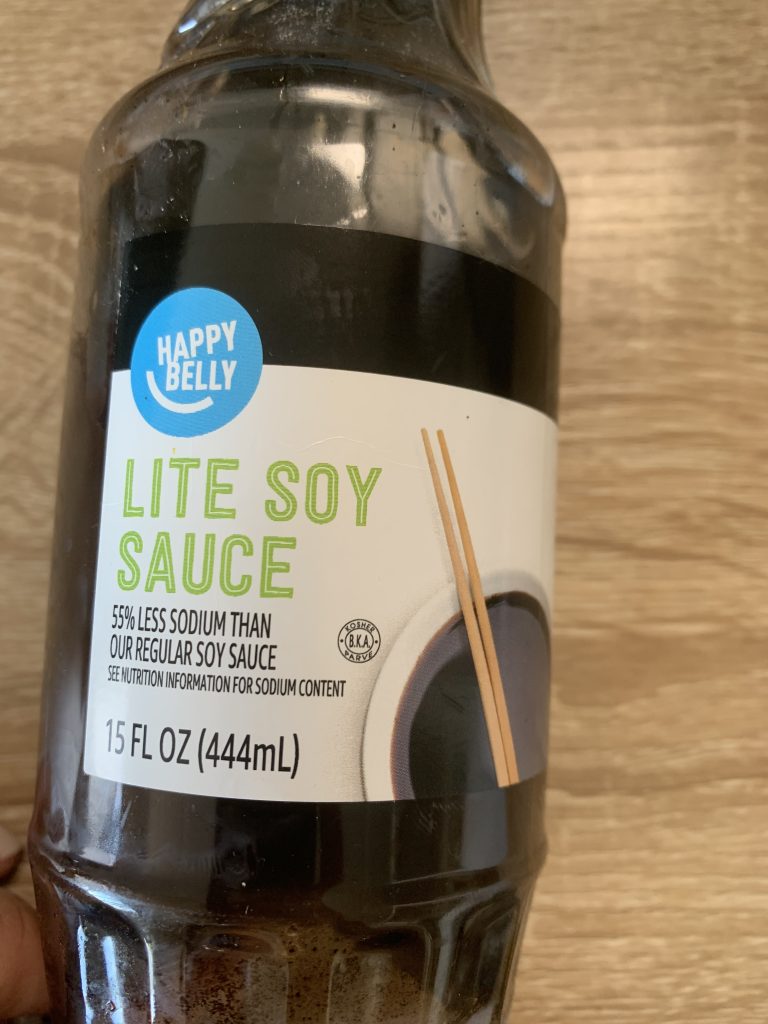
Now, before we spiral–it’s fine to eat foods that are higher in sodium as long as we’re trying to stay under 2300mg total in a day.
But it’s important to learn how to identify true low sodium snacks so you can make informed decisions.
Best Practices for Choosing Low Sodium Snacks
- Always check the sodium and serving since on the back-of-package food label (click here if you have questions about how to read a food label).
- Go for minimally or unprocessed foods whenever possible (ex: fresh fruit, vegetables, and unsalted nuts).
- Look for brands with “low sodium”, “very low sodium” or “salt/sodium free” versions of popular your favorites snacks (like popcorn, pretzels, or crackers).
- Make some of your own snacks (if you have time) to control the sodium content (ex: roasted chickpeas or trail mix).
- Use herbs, spices, and citrus to season any homemade snacks (instead of salt).
Now that I roped you into some sodium education, let’s get to the main event–Here are 25+ delicious low sodium snacks you’ll love (that have little to no prep).
25+ Low Sodium Snacks
You have 3 options for snacks:
- Whole foods
- Homemade snacks
- Store-bought snacks
Whole Food Snacks
These heart healthy snacks will be “nutrient dense” (aka a lot of nutrition for what you’re eating), low-to-no sodium, and require almost no preparation.
- Fresh Fruit – Fruits don’t have a significant amount of sodium so any fruit you love (like apples, bananas, berries, grapes, melons, cherries, and oranges) are a great low sodium snack. Eat them as is, or add them to something like yogurt.
- Vegetables – Veggies also don’t have a significant amount of sodium in them. Which means they’re another no brainer option for low sodium snacks. You can eat your veggies raw, crisp them up or even turn them into a dip (think pico de gallo). And if you’re thinking “eww, veggies “–You can learn how to make vegetables taste good (really).
- Unsalted Nuts & Seeds – Almonds, walnuts, cashews, sunflower seeds, and pumpkin seeds are low sodium and are a source of protein and healthy fats (which will help you feel fuller for longer).
- Hard-Boiled Eggs – A simple, protein-packed snack that’s naturally low sodium. Eggs do taste good with salt, but you can also try pepper, paprika, chili powder (if you like a kick) and even lemon juice with oregano. Go on…give it a try.
- Avocado Slices – Enjoy with low sodium crackers, or on their own with a squeeze of lemon.
- Plain Greek Yogurt – Low sodium and high in protein. If that’s not a power snack, I don’t know what is. You can get the flavored kind, just check the label for added sugar. Just like sodium, we want to limit how much added sugar we have in a day.
Homemade Low Sodium Snacks
These will require a little more prep. But you’ll also have more control over over the nutrition.
- DIY Trail Mix – Mix unsalted nuts, dried fruit, dark chocolate chips and even popcorn.
- Air-Popped Popcorn – You can get the kernels and air pop your popcorn on the stove. After your popcorn is ready, you could add cinnamon, nutritional yeast, or garlic powder (with a little salt) for extra flavor. It’s a great option if you have time (and if you don’t just buy some lol)
- No-Salt-Added Roasted Chickpeas – Open a can of chickpeas, put them on a sheet pan, coat in olive oil and season with paprika, chili powder or plain black pepper. Bake the chickpeas until they dry out and crisp up.
- Roasted Edamame -Coat the edamame in olive oil and then season them with paprika, chili powder, or plain black pepper before you roast them in the oven.
- Homemade Hummus – Blend chickpeas, tahini, lemon juice, and garlic.
- Apple Slices with a Peanut Butter & Greek Yogurt dip – Blend peanut butter with greek yogurt to make a dip for your apple slices. This is an easy way to get more fiber, protein and healthy fats into a low sodium snack.
- Chia Pudding – Mix chia seeds with milk and frozen berries, then let it sit overnight for a creamy snack.
- Frozen Grapes – They come out so refreshing. Wash you fresh grapes, dry them and then pop them in the freezer.
- Rice Cakes with Mashed Avocado – Add a sprinkle of black pepper or chili flakes for a little kick.
- Turmeric Balls– Here me out. These pack some inflammatory properties with spices like turmeric and ginger as main ingredients. Check out my recipe for Easy Turmeric Balls.
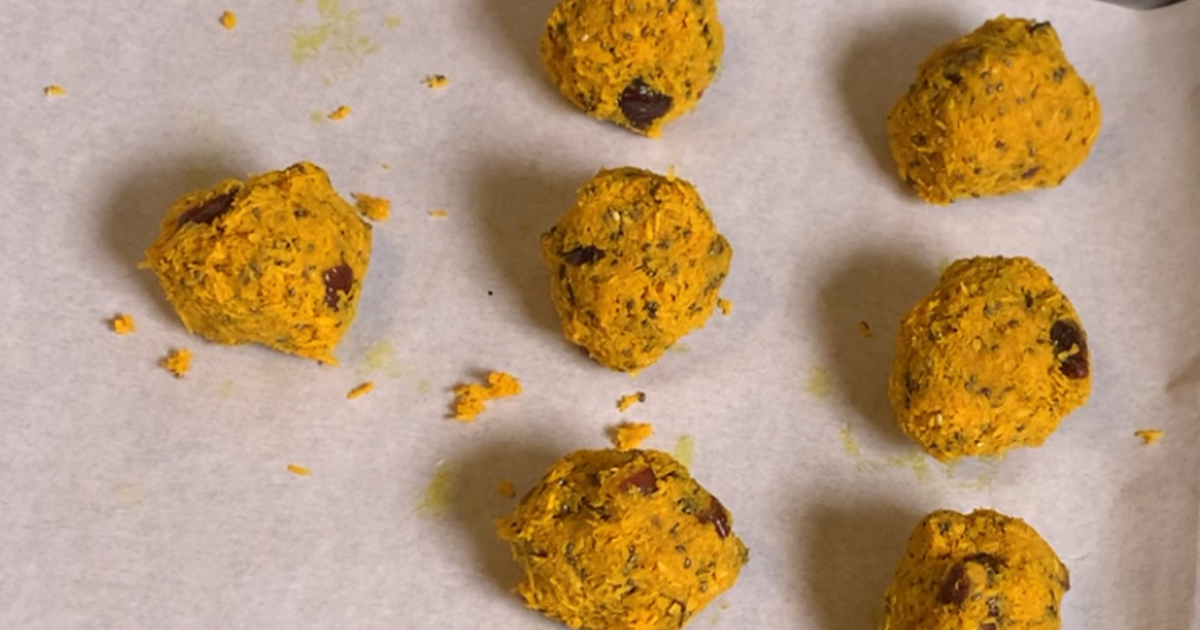
Easy Turmeric Ball Recipe
8
servings20
minutes0
minutes290
kcalThis is a super easy turmeric ball recipe you can make in 20 mins or less. Turmeric is a great spice to include in your diet because of it’s active ingredient—- curcumin.
Curcumin has antioxidant and anti-inflammatory properties so it’s linked to:
– Improved mood and reduced anxiety/depression
– Less joint pain and body aches
– Improved weight management
– Lower heart disease risk
And turmeric balls are an easy snack or breakfast side you can eat at home or on the go.
Recipe Notes:
If balls are too crumbly, add more water, honey or dates. If balls are too soft, add more coconut and dry ingredients. You can add cayenne pepper if you like a spicy kick.
Ingredients
2 tbps 2 turmeric powder
2 cups 2 unsweetened shredded coconut
3 tbps 3 maple syrup
1/4 tsp 1/4 black pepper
14 14 mejdool dates (pitted and diced by hand or use a food processor/blender)
2 tbsp 2 chia seeds
1 tbsp 1 ground ginger
2 tsp 2 ground cinnamon
1/3 cup 1/3 room temperature water
How to make
- In large bowl, combine all ingredients until well mixed.
- Using clean hands, roll portions of paste into 1.5-inch balls
- Refrigerate for at least 1 hour before serving.
Equipment
- Blender or food processor (optional)
- Knife
- Cutting board
Do nutrition labels confuse you?
- Let’s change that – Learn: how to read a nutrition label
Store-Bought Low Sodium Snack Options
Many people think that snacks can’t be healthy if they come pre-packaged, but you can absolutely find plenty of low sodium snacks.
Just read the label first! In fact, you might be eating some of these heart healthy snacks already.
And you can get these at Walmart, Trader Joe’s, Whole Foods, Target or even Aldi’s.
- Jif To Go Peanut butter Cups – A great on-the-go option with fruit. One to go container has 130mg of sodium.
- Low Sodium Crackers like Triscuit Hint of Salt or Unsalted Matzo – You can have 12 Triscuit crackers and stay under 140mg of sodium! Much more filling than the 3 crackers you get with other brands lol. Or you can try unsalted Matzo as your cracker.
- Plain Rice Cakes or Puffed Corn Cakes – A crunchy, low sodium alternative to chips.
- Low Sodium Popcorn Brands like SkinnyPop – Check the labels first!
- Unsweetened Applesauce – A quick, no-prep snack with natural fruit sweetness.
- Low Sodium Pretzels – Look for brands with lower sodium options like Snyder’s of Hanover Unsalted Mini Pretzels. Those have 90mg of sodium per serving (19 crackers or 1oz).
- Dried Fruit (Unsweetened, No Added Salt) – Raisins, dried mango, and apricots are great choices.
- Dark Chocolate (70% or Higher Cocoa Content) – Low in sodium and packed with antioxidants.
- GimMe Roasted Seaweed Snack–One pack has ~80mg of sodium. Plus, seaweek has antioxidants and nutrients that may support thyroid, heart and gut health.
- Apple Chips– I am obsessed with Bare Apple chips. They’re just apples…as chips. What is not to love?
- Fiber One brownies- I’ll give Little Debbie the win on flavor but Fiber One brownies are 70calories, 85mg of sodium and 2g of sugar–there’s a lot to love about that nutrition.
Final Thoughts on Low Sodium Snacks
Whether you’re looking for something quick and easy or something to prepare at home, these snacks will help you stay on track with your health goals (aka save the heart, save the kidneys).
Next, let’s go over smart strategies for making low sodium snacks a habit.
Smart Tips for Snacking on a Low Sodium Diet
Finding low sodium snacks is only part of the solution. We need to make these types of snacks a habit. Which can be hard when we’re used to our “usual” snacks.
The best analogy I’ve ever read for habit building is that an old habit is like a road that’s been plowed. It’s clear where the road is. But a new habit is like trying to make a new path in a field with fresh snow.
We have to keep trying to take the same path over and over until it becomes as easy to take as the plowed road.
But until we trek that path enough to start making a clear path, we need to help ourselves continue to take that new path.
So here some practical strategies to help you take that (new) low sodium snack path:
1. Keep Low Sodium Snacks Where You Need Them
- At home? Keep prepped fruit, veggies, and unsalted nuts in plain sight. Don’t bury them in the back of the fridge or pantry.
- At work? Stash your snacks in your desk or keep them in the fridge if you have access to one (just don’t forget about your snacks!)
- On the go? Keep snacks like unsalted trail mix, peanut butter cups or rice cakes in your car or bag.
Because the easier a snack is to grab, the more likely you’ll eat it (instead of having to run to Panera or the vending machine again).
2. Make Simple Swaps (that you don’t hate)
You can keep your favorite snacks–just tweak them.
If you like salted peanuts (~180mg of sodium per serving), try Blue Diamond Roasted Salted Almonds (85mg sodium per serving). Next time you’re at the store, look at the snacks around your favorite ones. I bet there are some low sodium options that are pretty similar to your favorite snack.
The best swaps are the ones that don’t make you feel like you’re missing out.
3. Stock Up Low Sodium Snacks Ready
We’ve all made that grocery list with the best intentions. And then we didn’t make it to the store. Oh well, life happens. Perfectly normal.
But that’s when we start grabbing whatever’s around and the “I shouldn’t be eating this” thoughts creep in.
Set stock up on low sodium snack “staples” that will get you thru until you make it to the store:
- A banana or apple (they keep well)
- Unsalted nut butter packs (perfect with crackers or fruit).
- Plain popcorn (add your own flavors at home).
- Dried fruit (without added sugar or salt).
- Low sodium granola (for quick snacking).
4. Don’t Be Afraid to Try New Snacks
One of the biggest myths about low sodium snacks is that they’re bland. But maybe roasted seaweed or apple chips will become your new favorite snack.
You don’t know unless you try.
5. Balance Sodium Intake Across the Day
Low sodium snacks definitely help. But it’s the whole day’s intake matters. So just be mindful of how much sodium you’re having between all your meals and snacks.
Again, I’d recommend:
- 560mg of sodium or less per meal
- 150mg of sodium or less per snack
But don’t stress out if one day is high in sodium. What matters is your overall pattern, not perfection.
TLDR: Small Changes, Big Impact
Eating less sodium is simple. But it isn’t easy if your diet does include a lot of sodium now)– Which is fine. Small, sustainable changes add up over time. And it can start with your snack choices.
✅ Check nutrition labels—look for 140mg or less per serving to find true low sodium options.
✅ Swap high-sodium snacks for lower-sodium versions (e.g., unsalted nuts instead of salted, low sodium crackers instead of regular).
✅ Keep easy, low sodium snacks on hand—at home, work, and on the go.
✅ Try new snacks- maybe they’re better than you think they’ll be and can give you more options
✅ Balance sodium intake across meals—if one meal is higher in sodium, go lighter on the next.
✅ Plan ahead—prep fruits, veggies, and homemade snacks so you have low sodium snacks ready.
✅ Know that no one eats perfectly all the time.
Your Next step: Pick at least one of these low sodium snacks to try this week. Put it on your shopping list. Pick the day you’re going to actually eat it. Then try it!
And when next week rolls around, do the same with a different snack.

 10 Proven Ways to Make Vegetables Taste Good (Really)
