

Italian ice is basically summer in a cup. Easy to justify because it’s not ice cream, it’s mostly fruit and ice. How bad could it be?
And honestly, it’s not that bad. But “not that bad” and “healthy” do not mean the same here.
The real answer to whether Italian ice is healthy depends on what you’re managing.
Because if you need to think about your blood sugar (because you’re working with insulin resistance or just trying to not crash at 3pm), then the sugar content of an Italian ice is worth taking a look at.
And that’s what this post is about. Not whether you’re allowed to eat Italian ice.
This post focuses on what’s actually in Italian ice, what it does to your blood sugar, and how to think about it while also thinking about your metabolic health.
What’s actually in Italian ice
Italian ice is water, sugar, and fruit juice or flavoring. That’s it. No dairy, no fat, no protein. Just water and simple carbs.
The big store brands like Wyler’s, Luigi’s, Lindy’s use sugar or sugar syrup as their primary sweetener. Some recipes use honey or agave instead, which sounds “healthier” but these are still added sugars.
And that’s something people don’t always know because agave somehow became this “healthy sugar alternative”. But agave syrup is around 85% fructose. High fructose corn syrup is usually 42% or 55% fructose.
Which means agave syrup has more fructose than high fructose corn syrup. Wild.
And this matters for your metabolic health because fructose is metabolized almost entirely by your liver. And over time, too much fructose can lead to a fatty liver or insulin resistance.
One good thing about agave syrup is that it’s sweeter than table sugar. That means you’re using less. And it’s a low glycemic index food (so your blood sugar rises more slowly).
But the “clean label” framing is misleading because agave syrup is still a highly processed food.

How Italian ice compares to other frozen desserts
Italian ice is usually lower in calories and fat than most frozen desserts. Here’s a rough comparison for 1 serving:
| Dessert | Calories | Fat(g) | Sugar (g) |
|---|---|---|---|
| Italian Ice | 100 | 0 | 20 |
| Ice Cream | 207 | 11 | 21 |
| Frozen Yogurt | 159 | 4 | 28 |
| Sorbet | 134 | 0 | 32 |
| Gelato | 204 | 9 | 25 |
So yes it is a lower calories and zero fat dessert. That part checks out. But look at the sugar content. Italian ice sits at 20–34g per serving. To give that context, a regular can of Coke has 39g of added sugar.
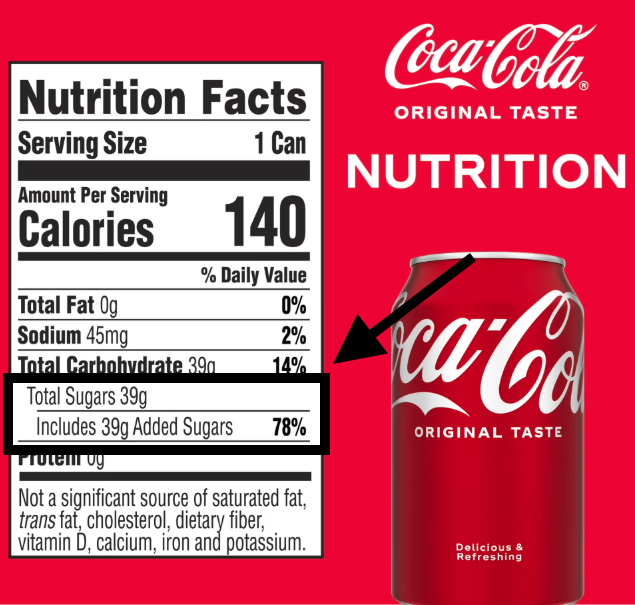
So Italian ice is not exactly in low-sugar territory here.
And unlike ice cream or gelato, there’s no fat or protein to slow anything down. Which brings us to the blood sugar piece.
What Italian ice does to your blood sugar
When you eat simple sugar without fat, protein, or fiber, it’s going to hit your bloodstream fast. Italian ice is essentially sugar and water, which is easy for our body to digest quickly.
That’s why it’s best to eat dessert with a meal because your main meal will likely have fat, protein and fiber in it which take longer to break down.
Eating dessert with your meal is the simplest thing you can do to help control your blood sugar.
But things are harder when you are:
- Managing insulin resistance, pre-diabetes, or diabetes
- Eating dessert alongside other high-sugar foods in the same sitting
- Missing out on balanced meals
The Dietary Guidelines recommend no more than 10% of your daily calories come from added sugar. So for someone eating 1,800 calories a day, that’s about 45g per day.
One Italian ice takes up about half of that allowance. Now that’s not a reason to ban Italian ice from your diet. And it doesn’t make italian ice unhealthy.
It’s just useful information for deciding where it fits into your eating pattern.
3 things to consider when good metabolic health is your goal
1. Timing matters
Have Italian ice after a meal, not on its own. The food in your stomach slows down how fast your body will breakdown and absorb your Italian ice. This is a small change that makes a real difference over time.
2. Check the serving size
Wyler’s lists three bars as one serving.
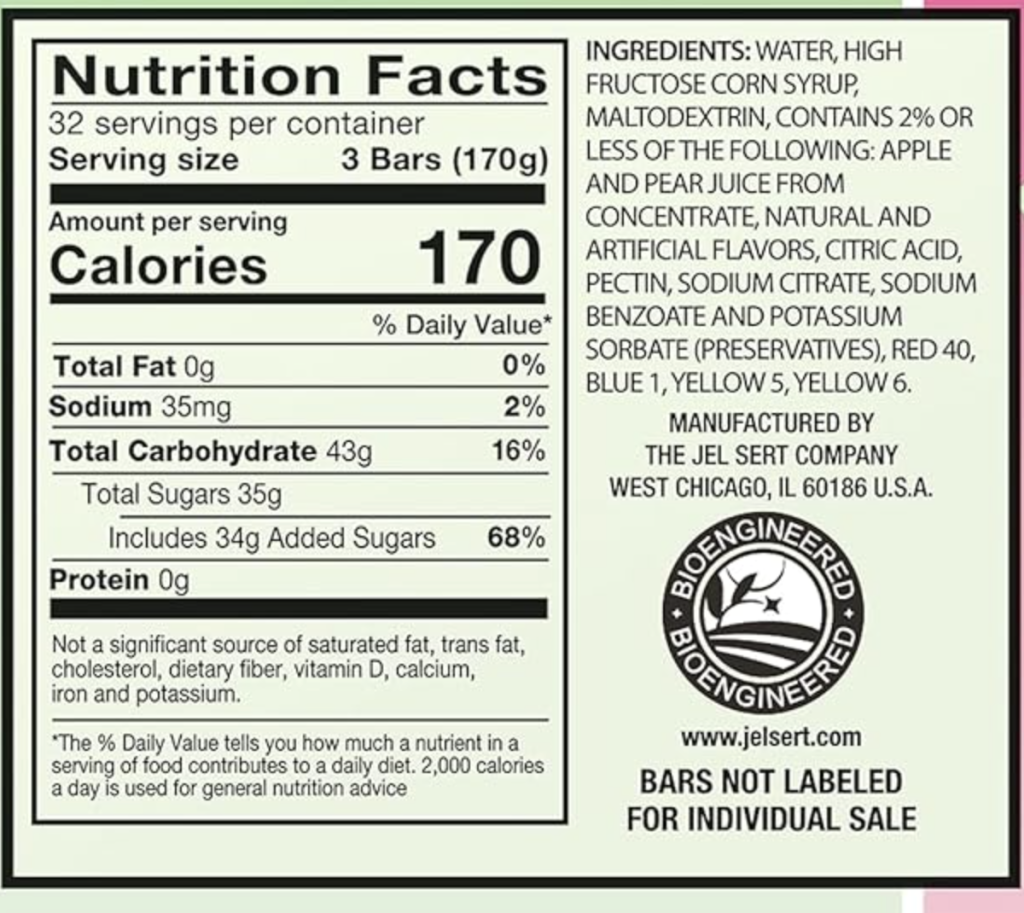
Each bar is on the smaller side, so if you eat 3, that means you’re eating 34g of added sugar. Which totally fits even if you’re eating like 1400 calories per day.
But if you have 1 bar, that’s 11g of added sugar. So sometimes just adjusting the portion size can make an impact.
3. Look at your full day, not just the Italian ice
If the rest of your day is low in added sugar, go ahead and eat all 3 Italian ice bars if you want. But you might be eating more added sugar from your cereal, flavored yogurt, coffee creamer, BBQ sauce or bubbly drink than you realize.
And then your Italian ice is just adding to a pattern that’s already working against your blood sugar.
But again, the Italian ice isn’t the problem. It’s a problem with your overall eating pattern. Which is simple to fix when you learn how to read food labels and balance meals.
So is Italian ice healthy?
It’s lower in calories and fat than most frozen desserts, and it absolutely fits into a healthy diet. But it’s not low in sugar and there’s no fiber or protein to help slow down how fast it hits your blood stream.
If you’re managing blood sugar or working on your metabolic health, it’s not a food to fear. It’s just a food to be strategic about.
Timing, portion size, and what the rest of your day looks like matter way more than whether Italian ice is on some approved list.
Having one on a summer afternoon after lunch? Completely fine.
Three a day on an empty stomach while the rest of your diet is also high in added sugar? That’s when we want to really start thinking about our choices.
But if you have the right skills and healthy eating habits, you can honestly eat any food you want and it will be fine.
Want to understand how food actually affects your metabolic health?
I send a free email course on the skills that make a real difference in your metabolic health (blood sugar, cholesterol, liver health)without the meal plans and rules that fall apart by Thursday.
And if you want the bigger picture on what metabolic health actually means and why it’s a more useful frame than “healthy eating,” start here: What is metabolic health and why does it matter?

 12 Reasons Why Intermittent Fasting Isn’t Working (and what your Metabolism is telling you)
